A quantum harmonic oscillator—a structure that can control the location and energy of quantum particles that could, in the future, be used to develop new technologies including OLEDs and miniature lasers—has been made at room temperature by researchers led by the University of St Andrews. The research, conducted in collaboration with scientists at Nanyang […]
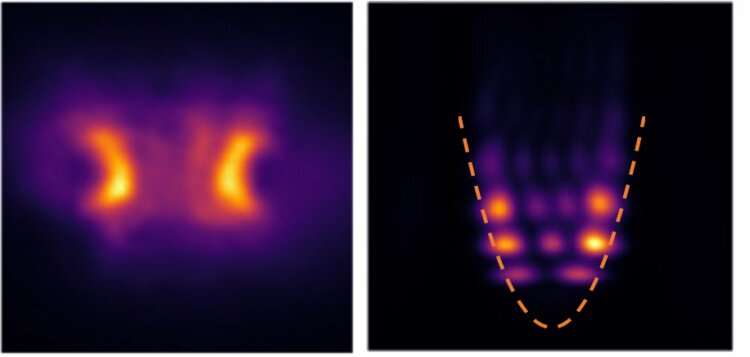
[et_pb_section fb_built=”1″ admin_label=”section” _builder_version=”4.16″ global_colors_info=”{}”][et_pb_row admin_label=”row” _builder_version=”4.16″ background_size=”initial” background_position=”top_left” background_repeat=”repeat” global_colors_info=”{}”][et_pb_column type=”4_4″ _builder_version=”4.16″ custom_padding=”|||” global_colors_info=”{}” custom_padding__hover=”|||”][et_pb_text admin_label=”Text” _builder_version=”4.16″ background_size=”initial” background_position=”top_left” background_repeat=”repeat” global_colors_info=”{}”] A quantum harmonic oscillator—a structure that can control the location and energy of quantum particles that could, in the future, be used to develop new technologies including OLEDs and miniature lasers—has been made […]

[et_pb_section fb_built=”1″ admin_label=”section” _builder_version=”4.16″ global_colors_info=”{}”][et_pb_row admin_label=”row” _builder_version=”4.16″ background_size=”initial” background_position=”top_left” background_repeat=”repeat” global_colors_info=”{}”][et_pb_column type=”4_4″ _builder_version=”4.16″ custom_padding=”|||” global_colors_info=”{}” custom_padding__hover=”|||”][et_pb_text admin_label=”Text” _builder_version=”4.16″ background_size=”initial” background_position=”top_left” background_repeat=”repeat” global_colors_info=”{}”] Classical machine learning (ML) algorithms have proven to be powerful tools for a wide range of tasks, including image and speech recognition, natural language processing (NLP), and predictive modeling. However, classical algorithms are limited by the constraints […]
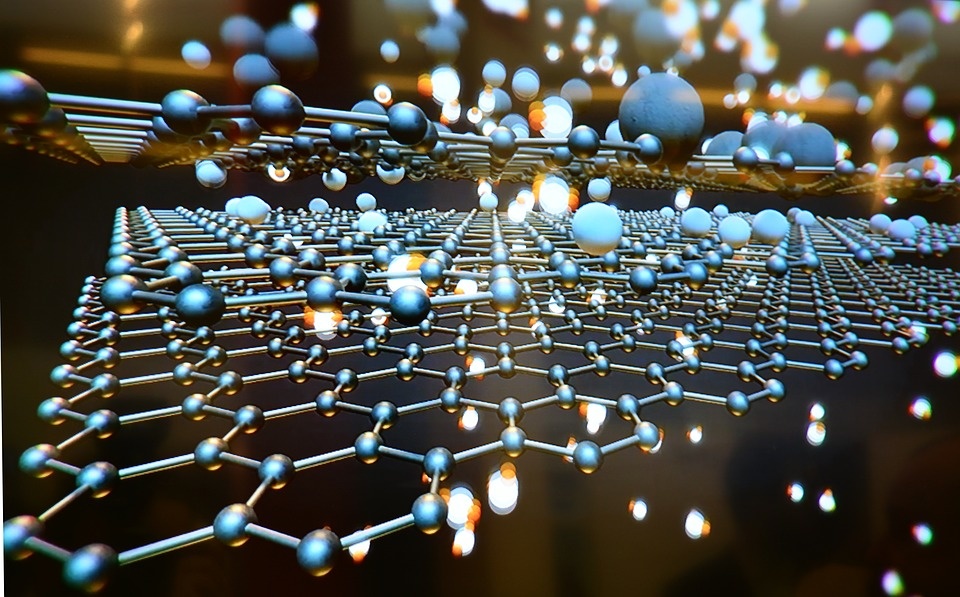
[et_pb_section fb_built=”1″ admin_label=”section” _builder_version=”4.16″ global_colors_info=”{}”][et_pb_row admin_label=”row” _builder_version=”4.16″ background_size=”initial” background_position=”top_left” background_repeat=”repeat” global_colors_info=”{}”][et_pb_column type=”4_4″ _builder_version=”4.16″ custom_padding=”|||” global_colors_info=”{}” custom_padding__hover=”|||”][et_pb_text admin_label=”Text” _builder_version=”4.16″ background_size=”initial” background_position=”top_left” background_repeat=”repeat” global_colors_info=”{}”] Graphene is insanely useful, but very difficult to produce — until now. Graphene is a lattice of carbon atoms arranged in a chicken-wire formation, a structure that makes it very useful for a […]